
My home at the intersection
Touring Now
~
Touring Now ~
How do we move on with a heritage of violent conflict and collective trauma and what is to be done about the ensuing dilemmas of memory?
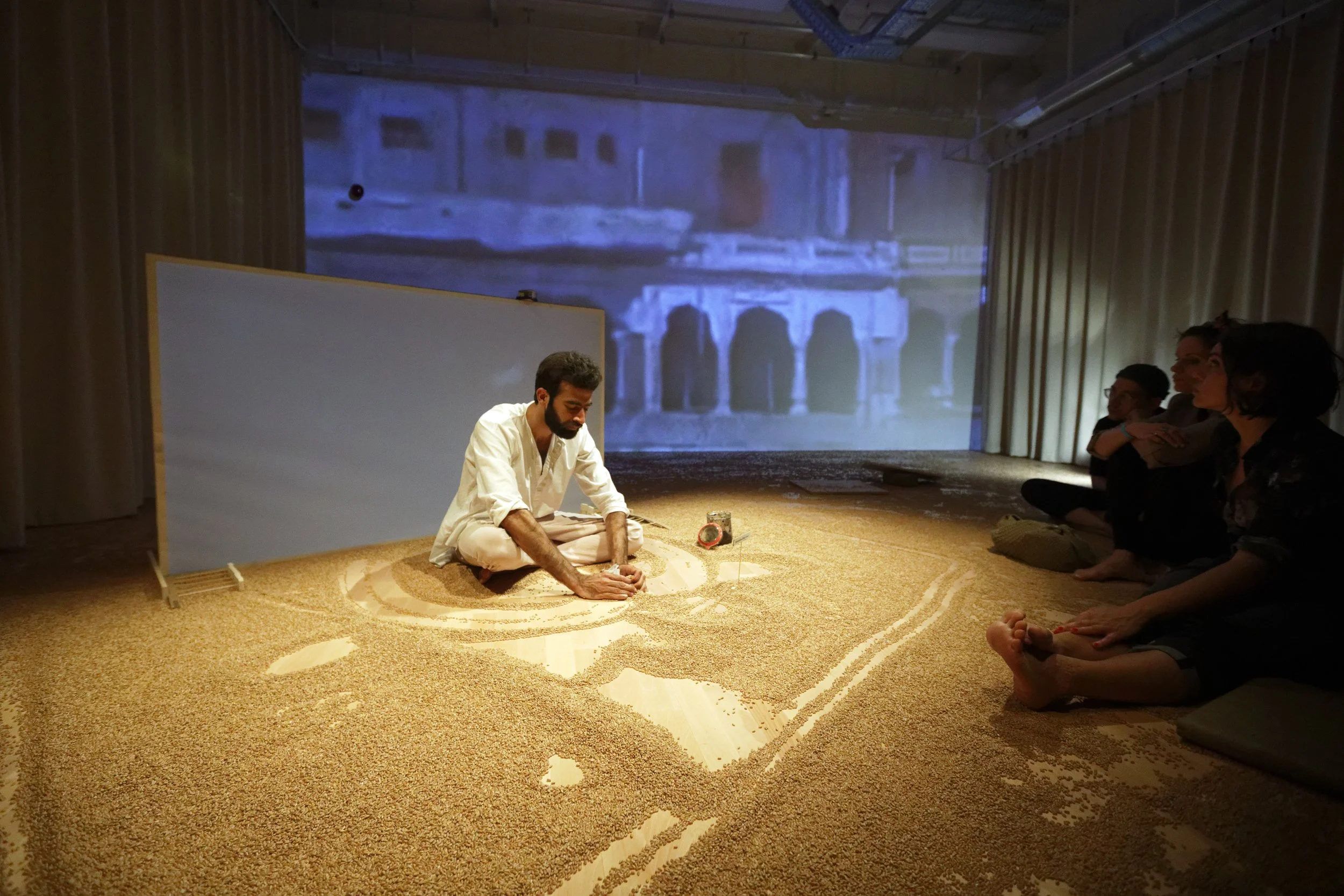
Abhishek Thapar, born in East Punjab in the 1980s, went on a search for the truth(s) of the past when he decided to travel to his hometown Moga. Together with his mother, father and sister, he re-visited his childhood home: a house that had disappeared, a place they all thought they had forgotten and which yet persisted, preserved in a jar of haunting images, between the conflicting priorities of official histories and the personal memories of three generations. In a final pursuit of closure, the family returned to the house and moved back in. Together they created a work of art...
My home at the Intersection complicates reductive perceptions of Punjab’s recent history, producing an imagination that goes beyond dichotomies of perpetrators and victimhood, outside and inside, terrorism and resistance. In the intimate setting of his performance, Abhishek Thapar unfolds moments from a personal journey into a contorted past in dialogue with documents from an attempt of a ritual of - ‘going back, to make sure that you have forgotten about the past.
The global geopolitical landscape – rife with war and forced displacement – presents art with the challenge of creating forms to deal with traumas of loss (the loss of one’s home, citizenship, nationality, language, etc.). Can art produce experiences that help achieve closure for those affected by disaster?
My home at the Intersection attempts to offer an existential proposition in response to the notion of closure in trauma narratives.
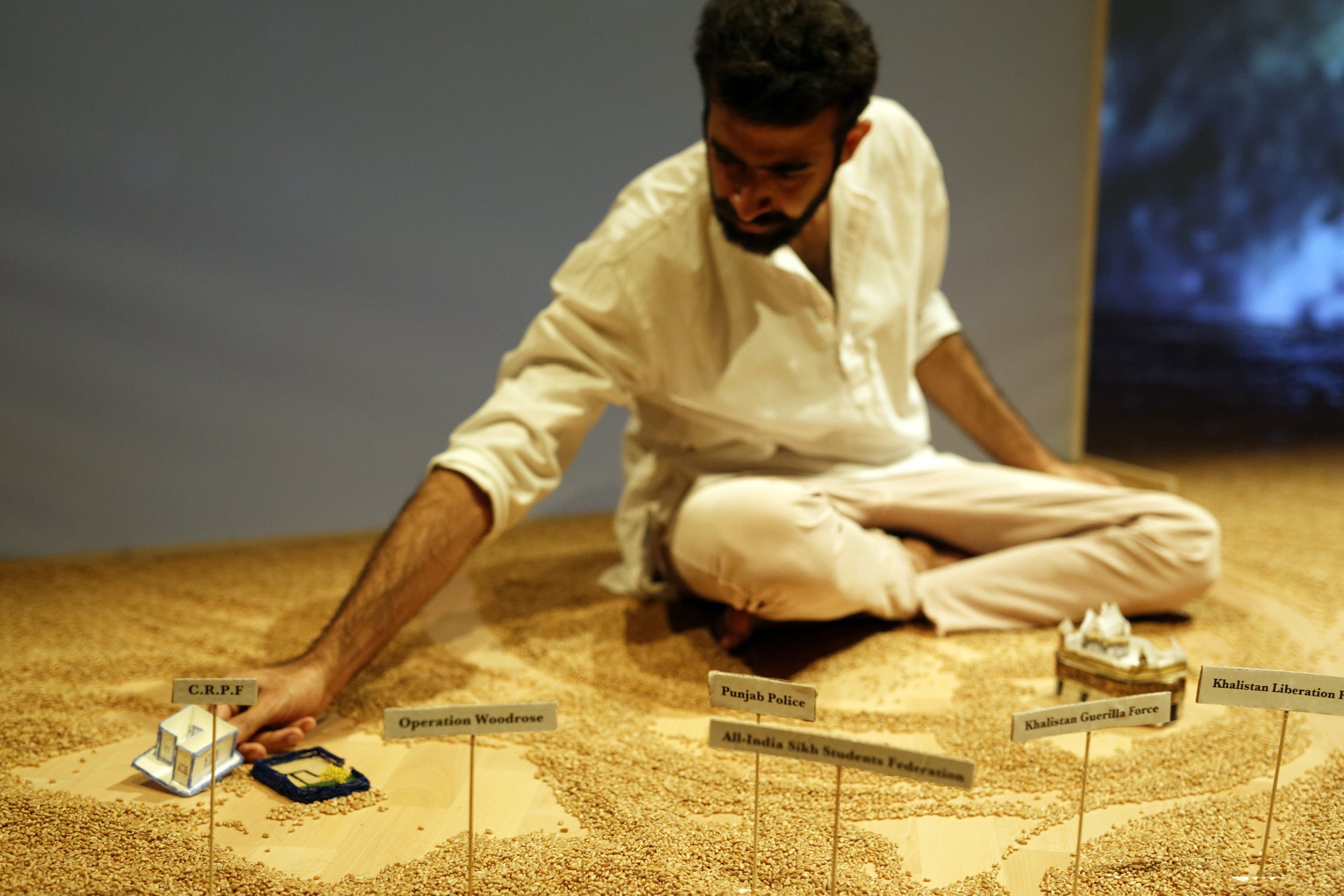
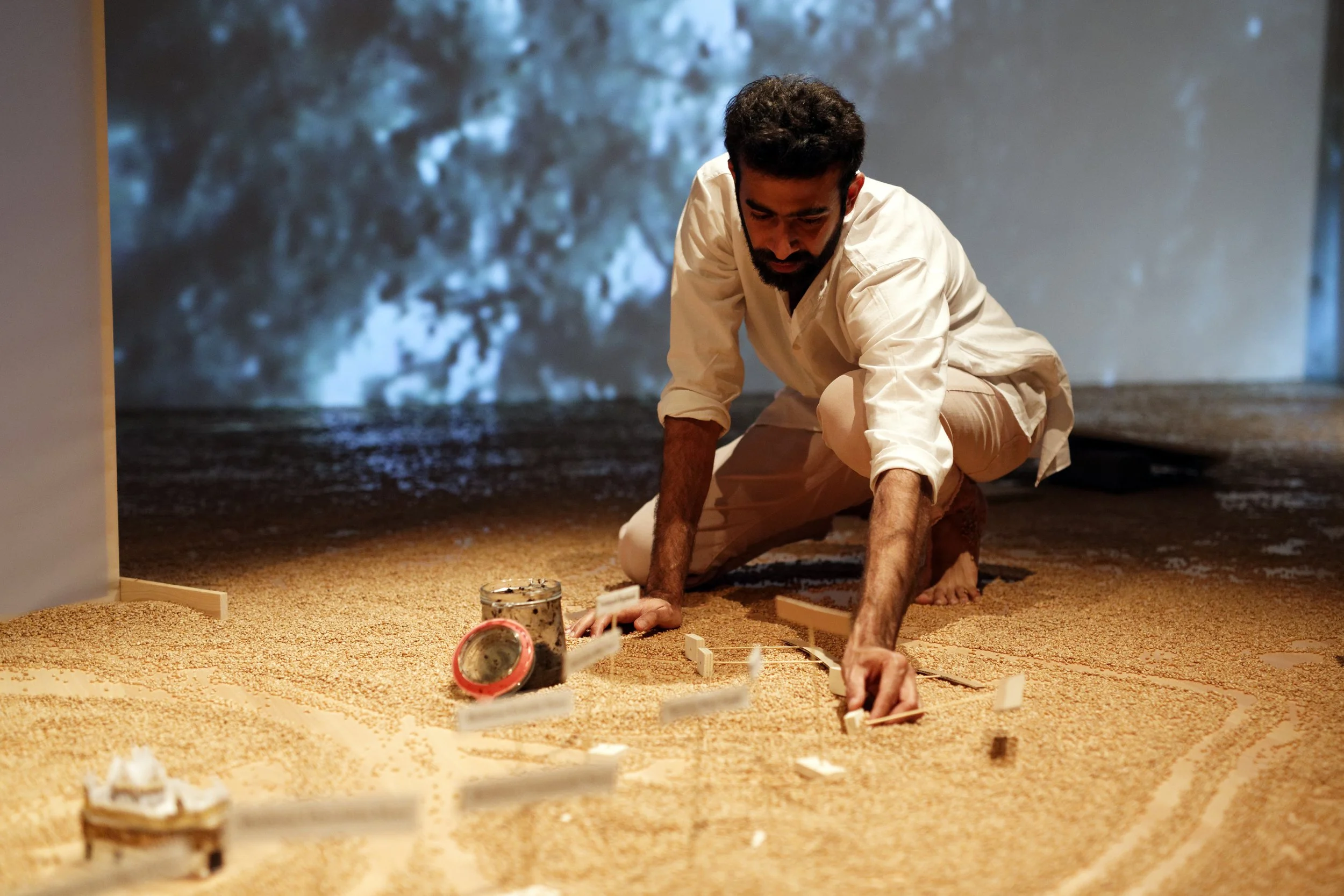
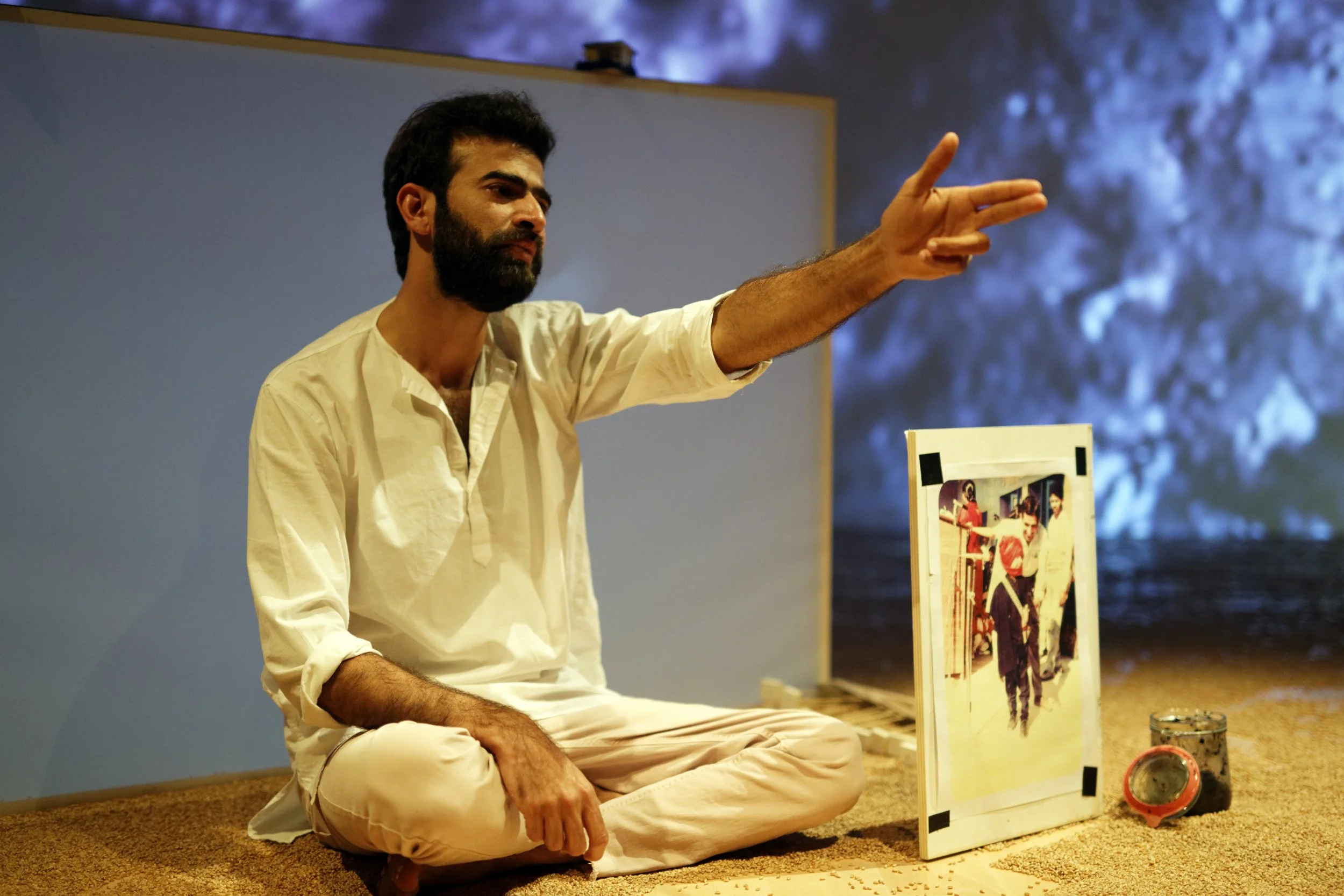
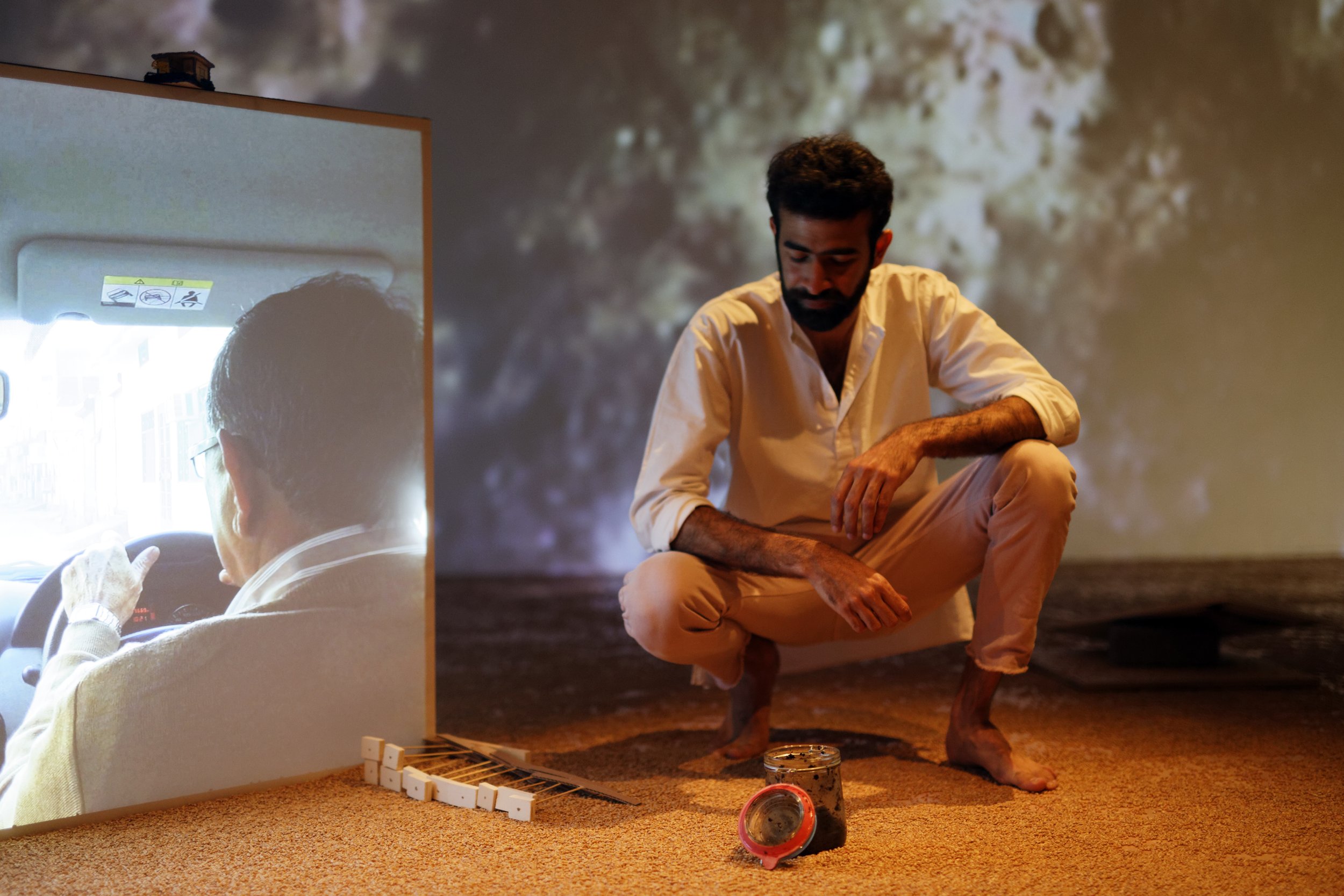
Photography : Thomas Lenden
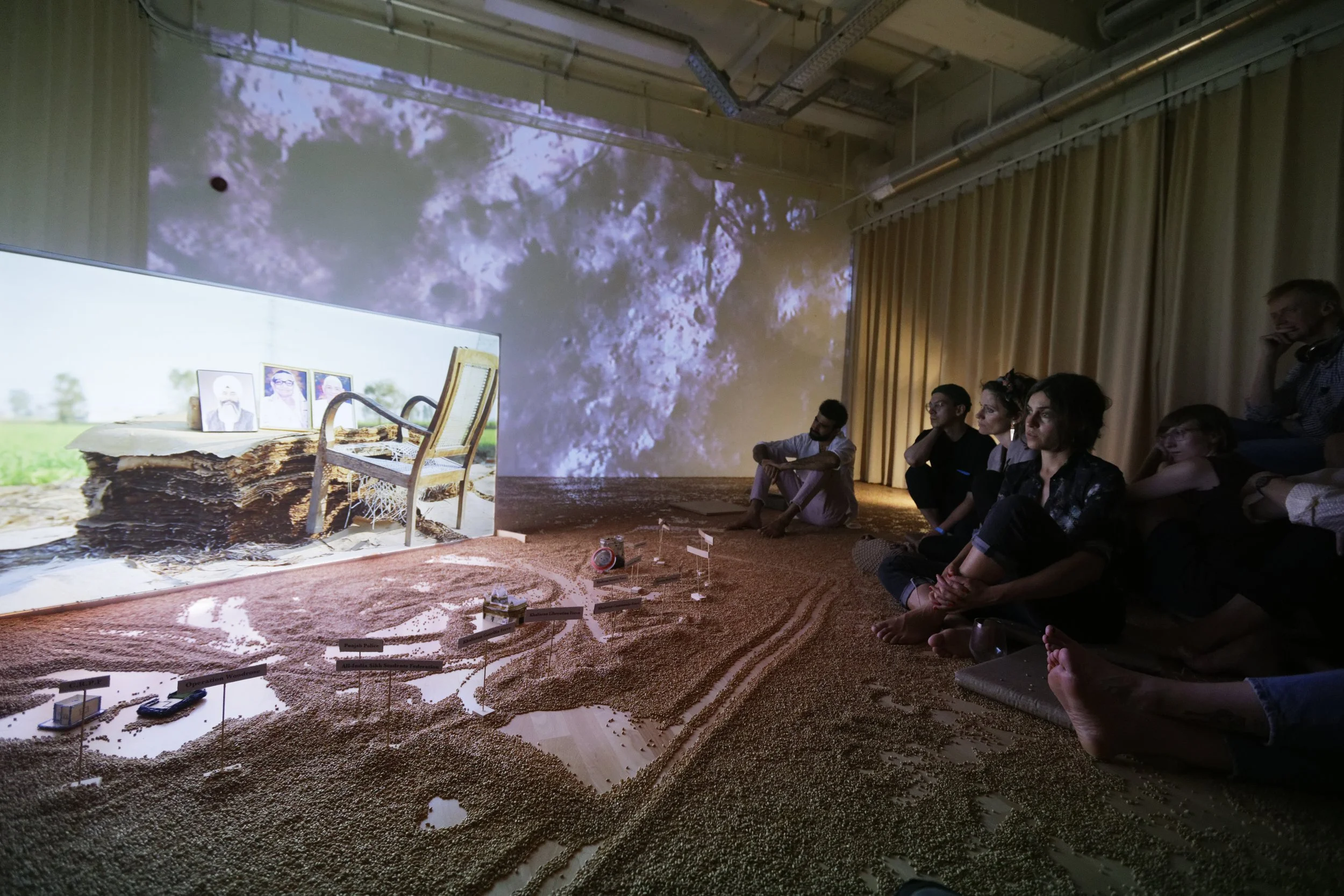
Credits
Concept, Text, Performance
Abhishek Thapar
along with Venu Thapar, Shveta Grover and Ashok Thapar
Dramaturgical Support
Maria Rößler
Text Advice
Divya Nadkarni
Advisors
Floris van Delft and Jeroen Fabius
Cinematographer
Sahib Gill
Film Editing
Jeanette Groenendaal and Rinku Kalsy
Music Composition
Kabeer Kathpalia
Costumes
Loise Braganza
Primary Research
Abhishek Thapar and Swati Simha
With contributions from
Dr. Sudha Thapar, Dr. Neelu Koura, Dr. Pawan Thapar and Karan
Special Thanks
Chandana Sarma, Arash Qajar, Amandeep Sandhu, Jimmy Grima,
Barbara van Lindt, Juul Beeren, Vera van Baal, Martin Brans, Mirko Lazovic
Co-produced by
DAS Theatre, Amsterdam
Producer
Afra Tafri Creations
Photography
Thomas Lenden